Your Cart is Empty


Dog Cloud
October 6, 2026
Why Is My Senior Dog Struggling With Stairs? Causes, Signs & How to Help
If your senior dog has started hesitating at the bottom of the stairs, taking each step more slowly, or avoiding them altogether, it can be easy to put it down to age. But difficulty with stairs can be one of the first noticeable signs that something has changed with your dog's mobility.
Stairs ask a lot of a dog's body. Climbing up requires strength through the hind legs and hips, while coming down requires balance, joint stability and controlled movement. Changes in any of these areas can make something your dog has done thousands of times suddenly feel much more difficult.For older dogs, arthritis and joint discomfort are common reasons for this change, but they aren't the only possibilities.
Here’s what to look for, what may be causing it, and how you can make everyday life easier for your dog..
Why is my older dog suddenly struggling with stairs?
A senior dog may begin struggling with stairs because of changes in their joints, muscles, strength, balance, vision or overall mobility. Sometimes the change is obvious. Your dog might stop halfway up the stairs or refuse to attempt them altogether.
Other signs can be much more subtle. You might notice your dog:
- Pausing before taking the first step
- Taking stairs more slowly than they used to
- Using a “bunny hopping” movement with their back legs
- Pulling themselves upward with their front legs
- Hesitating more when going downstairs
- Slipping or losing their footing
- Avoiding a particular staircase
- Waiting for you to help or carry them
- Seeming stiff after reaching the top
- Choosing to stay on one floor of the house
These changes are worth paying attention to, particularly if they're new or becoming more noticeable over time..

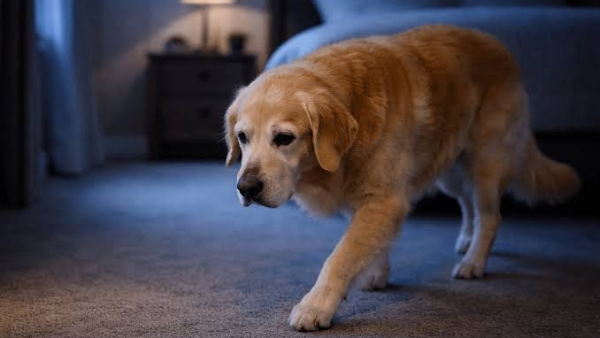
Signs may be quite subtle, including: taking stairs more slowly, hesitating more when going downstairs and more.
Is struggling with stairs a sign of arthritis in dogs?
It can be. Osteoarthritis is common in dogs, particularly as they get older. It affects the joints and can contribute to pain, stiffness and reduced mobility.
A dog with arthritis may still be able to walk, play and seem happy while beginning to find specific movements more difficult. Stairs can be one of the places owners first notice this because climbing requires greater joint movement and muscular effort than walking across a flat surface.
You may notice difficulty with stairs alongside other changes such as:
- Stiffness after sleeping or resting
- Taking longer to stand up
- Slowing down on walks
- Reluctance to jump into the car or onto furniture
- Changes in gait
- Less enthusiasm for activities they previously enjoyed
- Difficulty getting comfortable
- Reduced muscle around the hind legs
- Increased licking around a particular joint
If you've noticed your dog struggling to rise after resting as well, read our guide to why dogs struggle to get up after lying down. Importantly, difficulty with stairs doesn't automatically mean your dog has arthritis. An examination by your veterinarian is the best way to determine what is behind a change in mobility.

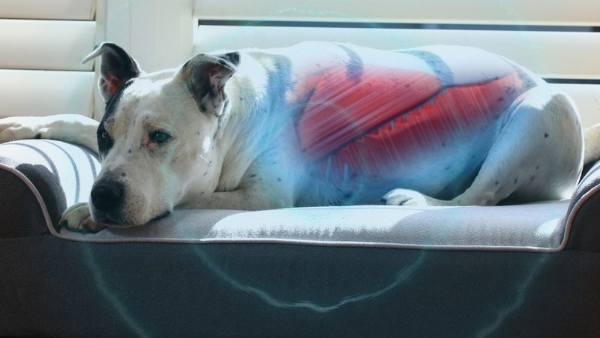
A dog with arthritis may still be able to walk, play and seem happy while beginning to find specific movements more difficult.
Why does my dog struggle going upstairs but not down?
Going upstairs places significant demand on your dog's hindquarters.
Your dog needs to push their body upward against gravity using the muscles and joints through their back legs, including the hips and knees. If your dog is losing hind-leg strength or experiencing discomfort in these areas, you may notice them hesitating, moving slowly or relying more heavily on their front legs.
This is also why an older dog may still appear reasonably comfortable walking on level ground while struggling with stairs.

What if my dog struggles going downstairs but not up?
Coming downstairs presents a different challenge. Instead of generating power to move upward, your dog needs to control their descent while maintaining balance and absorbing their body weight with each step.
For some senior dogs, going down can therefore appear more difficult or intimidating than going up. Poor traction can make the problem worse. Smooth timber, laminate or tiled stairs can become particularly challenging if your dog already has reduced strength or confidence.
Vision changes can also affect how confidently an older dog navigates steps, particularly in low light.
The direction your dog struggles with can provide useful information, but it isn't enough to diagnose the underlying problem. Mention exactly what you've observed when speaking with your veterinarian.

Vision changes can also affect how confidently an older dog navigates steps.
Other reasons a senior dog may struggle with stairs
Arthritis is only one possibility. Changes in stair use can also be associated with other orthopedic, muscular or neurological problems, injury, weakness, balance changes or vision problems.
That's one reason it's important not to simply assume:
“They're getting old.”
Age itself isn't a diagnosis. A noticeable change in something your dog could previously do comfortably is information worth paying attention to. If the difficulty appeared suddenly, your dog seems painful, has fallen, cannot bear weight on a limb, is dragging or knuckling a paw, appears unusually weak, or has experienced a major change in coordination, contact your veterinarian promptly.

How can I help my senior dog with stairs?
The first priority is understanding why they're struggling. Your veterinarian can assess your dog's joints, gait, strength and overall health and recommend appropriate treatment or management based on the underlying cause. There are also practical changes you can make around the home.
Improve traction:
Slippery flooring can make mobility problems considerably harder. Non-slip stair treads, runners, rugs and mats can give your dog more confidence and reduce slipping around commonly used areas.
Reduce unnecessary stair use:
Your dog doesn't necessarily need to keep proving that they can manage the stairs. If climbing them is becoming difficult, consider whether frequently used items can be moved onto one level of the home.
Keep essential items within easy reach:
Can they reach their water without crossing slippery flooring? Do they need to climb stairs every time they want to go outside? Small environmental changes can remove a surprising number of unnecessary mobility challenges.
Talk to your vet about appropriate exercise:
Movement remains important for many senior dogs, but the appropriate amount and type will depend on the individual dog and any underlying health conditions. Rather than dramatically increasing or stopping exercise yourself, ask your veterinarian or canine rehabilitation professional about an appropriate routine.
Pay attention to rest and recovery:
Senior dogs spend a significant amount of their day resting, making their sleeping environment an important part of their everyday routine. Watch what happens after your dog has been lying down.Are they stiff when they first stand? Do they take a few steps before beginning to move normally?

There are a range of practical changes you make around the house - from improving floor traction, to keeping essential items within easy reach.
When stairs tell you something has changed
For Harley, a nine-year-old Labrador, stairs became one of the clearest signs that her mobility was changing.
Her arthritis had progressed to the point where navigating the back stairs for nighttime toilet breaks had become difficult, and her family would sometimes carry her.
Dog Cloud subsequently became part of Harley's daily routine at home. Over the following weeks, her family began noticing changes in the everyday things that mattered to them — including Harley using the stairs again.
Stories like Harley's are a reminder that owners often don't measure their dog's quality of life using clinical numbers. They notice the little things - getting up more easily, walking with greater confidence, choosing to follow you into another room, or taking the stairs again.
You can read Harley's full story here.

9-year-old Harley was struggling with arthritis and mobility issues. After just a couple of weeks of using the Dog Cloud Bed, she was able to use the stairs again.
Supporting your dog's mobility at home
If your dog has arthritis or another ongoing mobility condition, veterinary treatment may only be one part of their overall management plan.
Their everyday environment matters too. That can include maintaining an appropriate weight, providing suitable exercise, improving traction around the home, creating accessible resting areas and following any medication, rehabilitation or treatment plan recommended by your veterinarian.
Some owners also explore complementary approaches to support their dog's comfort and mobility between appointments. Dog Cloud was designed around this idea of consistent support at home.
Instead of asking owners to find another time in the day for therapy, Dog Cloud incorporates gentle Cycloid Vibration Therapy into the place dogs already spend a significant amount of time: their bed.
The therapy uses gentle, non-percussive circular vibration and can be scheduled through the Dog Cloud app, allowing supportive therapy to become part of a dog's regular rest routine.

The Bottom Line
A dog refusing the stairs might seem like a small change. But our dogs can't tell us when a movement that used to feel easy has started becoming uncomfortable.
That's why the everyday signs matter. If your senior dog is hesitating on stairs, struggling after rest or changing the way they move, pay attention to the pattern and discuss it with your veterinarian. Understanding what's changed is the first step toward helping them keep doing more of the things they love.
Dog Cloud Customers also recieve 30 days FREE Dial a Vet calls. Speak to a Vet anytime, anywhere.
We were also voted best premium dog bed for 2026! Take a look.
Frequently Asked Questions
Why is my old dog suddenly scared of stairs?
It may look like fear, but reluctance to use stairs can sometimes be related to discomfort, weakness, reduced traction, balance difficulties or changes in vision. If this behaviour is new, particularly in an older dog, speak with your veterinarian rather than assuming it is simply behavioural.
Should a dog with arthritis use stairs?
This depends on the individual dog and the severity and location of their arthritis. Repeated stair use may be difficult for some dogs, while others can still navigate stairs comfortably. Your veterinarian or rehabilitation professional can advise you based on your dog's condition.
Why can my dog walk normally but struggle with stairs?
Walking on level ground and climbing stairs place different demands on the body. Stairs require greater strength, joint movement and balance, which can make subtle mobility changes more noticeable.
How can I make stairs safer for my senior dog?
Improving traction with secure stair treads or runners, providing good lighting, reducing unnecessary trips and keeping essential resources on an accessible level can help.
Depending on your dog's condition and home, a professionally appropriate ramp or other mobility aid may also be worth considering.
Is slowing down just a normal part of my dog getting older?
Dogs can naturally become less active as they age, but new stiffness, difficulty standing, reluctance to use stairs or changes in gait shouldn't automatically be dismissed as “just getting old.” These changes can sometimes indicate an underlying problem that may be manageable with appropriate veterinary care