Your Cart is Empty


Dog Cloud
June 16, 2026
At What Age Do Dogs Usually Get Arthritis? (And Why Most Owners Miss the Early Signs)
If you've noticed your dog slowing down, sleeping more, hesitating before jumping into the car, or taking longer to recover after a walk, you may be wondering:
At what age do dogs usually get arthritis?
It's a common question, but the answer often surprises dog owners. Most people assume arthritis only affects very old dogs. In reality, arthritis can begin developing years before a dog is considered a senior, and many dogs show subtle signs long before they receive a diagnosis.
Research from Cornell University's College of Veterinary Medicine confirms that osteoarthritis is not simply a disease of old age and can develop at any age, particularly in dogs with underlying risk factors such as obesity, previous injuries, or joint abnormalities. The challenge is that arthritis rarely announces itself with obvious symptoms at first. Instead, dogs adapt.
And because those changes happen gradually, many owners mistake them for normal ageing.
The Short Answer: What Age Do Dogs Get Arthritis?
While arthritis can affect dogs at any age, most dogs begin showing noticeable symptoms between 6 and 10 years of age, depending on their breed, size, genetics, weight, and joint health history.
Generally speaking:
- Large breeds often show symptoms between 5 and 8 years oldMedium-sized breeds commonly develop symptoms between 7 and 10 years old
- Smaller breeds may not show obvious signs until later in life
- Dogs with previous injuries or joint conditions may develop arthritis much earlier
What's important to understand is that arthritis often develops long before it becomes obvious.
The age a dog is diagnosed is rarely the age the disease actually began.

Most dogs begin showing noticeable arthritis symptoms between 6 and 10 years of age
Why Large Breeds Develop Arthritis Earlier
Not all dogs age the same way. Larger breeds tend to develop arthritis earlier because their joints experience greater mechanical stress over time.
Breeds commonly associated with earlier arthritis onset include:
- Golden Retrievers
- Labrador Retrievers
- German Shepherds
- Rottweilers
- Bernese Mountain
- Danes
These breeds are also more prone to conditions such as hip dysplasia and elbow dysplasia, which can accelerate joint degeneration. For example, a 6-year-old Golden Retriever may already be experiencing joint changes that affect comfort and mobility, even if they still appear active and happy.
That's one reason so many owners are caught off guard when arthritis is eventually diagnosed.

Larger breeds prone to joint conditions can develop arthritis earlier than others.
Can Young Dogs Get Arthritis?
Yes. One of the biggest misconceptions about canine arthritis is that it's exclusively a senior dog problem.
According to Cornell University, osteoarthritis can develop at any age, particularly in dogs with contributing factors such as obesity, developmental joint conditions, cruciate ligament injuries, or previous trauma.
Dogs may develop arthritis earlier if they have:
- Hip dysplasia
- Elbow dysplasia
- Patellar luxation
- Previous fractures
- Cruciate ligament injuries
- Chronic obesity
In some cases, arthritic changes can begin surprisingly early.
This is why veterinarians increasingly focus on proactive joint health and mobility support rather than waiting until symptoms become severe.

Osteoarthritis can develop at any age, particularly if the dog is already struggling with joint conditions.
The Real Problem: Dogs Hide Arthritis Extremely Well
One reason arthritis is often diagnosed late is because dogs rarely show pain the way humans do.
They don't complain. They don't tell us something hurts. Instead, they adapt.
A dog experiencing joint discomfort might:
- Take longer to get up after resting
- Walk slightly slower
- Avoid stairs occasionally
- Sleep more than usual
- Recover slower after exercise
- Become less playful
These changes happen gradually. Many owners simply assume their dog is "slowing down."
But according to veterinary experts, behavioural changes are often among the earliest indicators that something is wrong.

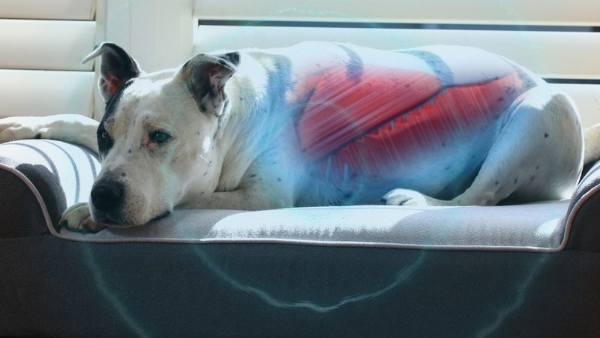
Dogs instinctively hide their pain, with noticeable physcial changes happening gradually.
The Early Signs Most Owners Miss
Before a dog starts limping, there are often subtle warning signs.
Watch for:
Stiffness After Rest
One of the most common early indicators. Dogs may appear stiff when getting up from bed but loosen up once they start moving.
Slower Recovery After Exercise
A walk that once energized your dog may now leave them tired for the rest of the day.
Hesitation Before Jumping
Cars, couches, beds, and stairs often become more challenging before owners notice obvious pain.
Sleeping More Than Usual
Dogs naturally sleep more as they age, but excessive sleeping can also be linked to discomfort and reduced mobility.
If you're seeing this in your own dog, you may find our article on Why Is My Dog Sleeping More Than Usual? helpful, as it explores the connection between behaviour changes, ageing, and pain.
Behavioural Changes
Pain doesn't just affect movement. Some dogs become quieter, less social, or more irritable when experiencing chronic discomfort.

There are a range of common early indicators owners can lookout for prior to official diagnosis.
Why Waiting Can Make Arthritis Harder to Manage
Arthritis is a progressive condition. Once cartilage begins to break down, the process typically continues over time.
While arthritis cannot currently be cured, early intervention can significantly improve quality of life and help slow progression.
The earlier mobility challenges are recognised, the more options owners have available.
This may include:
- Weight management
- Appropriate exercise
- Veterinary treatment
- Joint supplement
- Massage therapy
- Physiotherapy
- Hydrotherapy
- Laser therapy
- Daily mobility support strategies
The goal is not simply treating pain.The goal is helping dogs maintain movement, comfort, and independence for as long as possible.

Arthritis cannot currently be cured, but early intervention can significantly improve quality of life.
Supporting Dogs Earlier, Not Later
One of the biggest shifts happening in canine mobility care is a move toward proactive support.
Rather than waiting until mobility has significantly declined, more owners are looking for ways to support recovery, circulation, movement, and comfort earlier in the process.
This is especially important for breeds known to be at higher risk of arthritis and mobility decline.
Whether through exercise, rehabilitation, nutrition, or daily mobility support, consistency matters.
Because what happens every day often has a greater impact than what happens occasionally.

Proactive support and consistency is key to preventing arthritis in your dog.
The Bottom Line
So, at what age do dogs usually get arthritis?
For many dogs, symptoms become noticeable between 6 and 10 years of age.But the reality is that arthritis often starts much earlier than most owners realise.
The most important thing isn't your dog's age.It's recognising the small changes that often come before a diagnosis.
The earlier you notice them, the more opportunities you have to help your dog stay active, comfortable, and doing what they love for longer
.
Dog Cloud Customers also recieve 30 days FREE Dial a Vet calls. Speak to a Vet anytime, anywhere.
We were also voted best premium dog bed for 2026! Take a look.
References
1. Cornell University College of Veterinary Medicine. Osteoarthritis in Dogs. https://www.vet.cornell.edu/departments-centers-and-institutes/riney-canine-health-center/canine-health-topics/osteoarthritis
2. VCA Animal Hospitals. Arthritis in Dogs. https://vcahospitals.com/know-your-pet/arthritis-in-dogs
3. Port Road Veterinary Clinic. Arthritis in Dogs. https://www.portroadvet.com.au/arthritis-in-dogs/
4. GoodRx for Pets. Arthritis Symptoms in Dogs. https://www.goodrx.com/pet-health/dog/arthritis-symptoms
5. Emergency Vet Australia. Arthritis in Dogs. https://www.emergencyvet.com.au/resource-centre/diseases-conditions/arthritis-in-dogs.html